
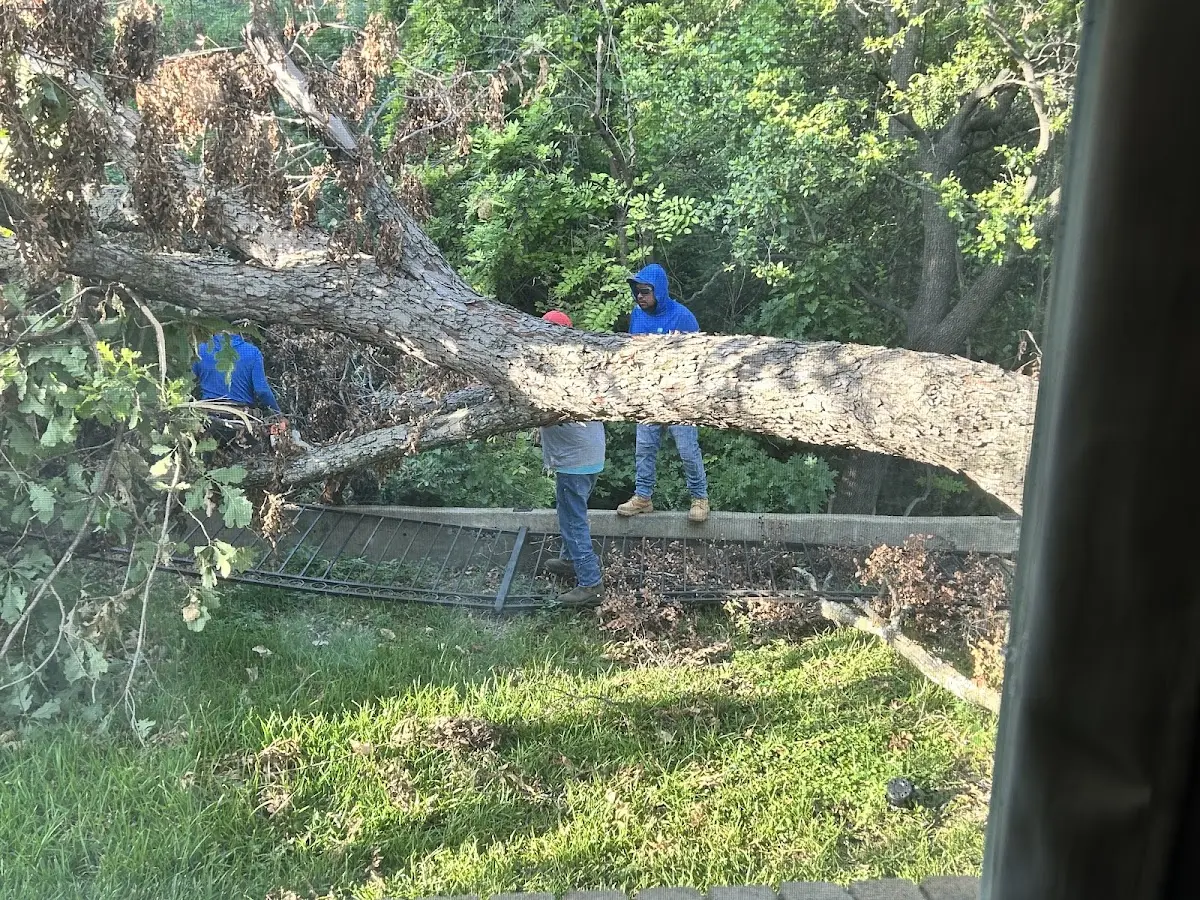
Trusted dead tree removal for Chester properties. 24/7 emergency response, careful work, and transparent pricing.
Dead tree removal in Chester done right. B. Haney and Sons Arborists arborists assess the wood condition before climbing or rigging anything, choose crane support whenever the tree integrity is questionable, and handle the takedown with the extra caution dead trees demand. Safety first, every time, on every dead tree.
Whether you own a single-family home or manage a commercial property in Chester, professional dead tree removal is essential for keeping your trees healthy, your property safe, and your insurance liability low. B. Haney and Sons Arborists has completed thousands of dead tree removal projects across West Virginia, and our Chester customers benefit from that depth of arborist experience on every job.
We understand that dead tree removal can feel uncertain when you are not a tree expert yourself. That is why B. Haney and Sons Arborists makes the process simple for Chester property owners — free written estimates, transparent pricing, full insurance coverage, complete cleanup, and a dedicated crew leader from start to finish. Your satisfaction with the work is our standard.

A clear, professional approach to dead tree removal — tailored to your Chester property.
Our Chester arborist arrives at your property to evaluate the situation — tree species, condition, target zones, and access. We answer your questions and explain exactly what the job involves.
We provide a clear written estimate covering scope, equipment, timeline, and cleanup — no hidden fees. Once approved, we schedule the work at your convenience.
B. Haney and Sons Arborists executes every dead tree removal project at your Chester, WV property with full safety protocols, proper equipment, and careful tree-care technique. Quality work, every time.
Our Chester crew cleans up everything before leaving — branches hauled off, chips raked smooth, stumps ground if part of the scope. We do a final walkthrough so you can confirm satisfaction.
Have questions about dead tree removal in Chester, WV? Start here.
The cost of dead tree removal in Chester depends on tree size, species, access, equipment required, and whether stump removal is included. B. Haney and Sons Arborists provides free written estimates with transparent pricing so you know exactly what to expect before any work begins. We work in a wide range of budgets and never quote blind.
B. Haney and Sons Arborists crews working dead tree removal jobs in West Virginia are led by ISA-trained arborists who follow ANSI A300 pruning standards and ANSI Z133 safety standards. Individual ISA certifications vary by team member, but every crew leader has the training to plan and execute the work properly.
Most dead tree removal jobs in Chester, WV are completed in a single day, with cleanup finished by close of business. Larger or more complex projects involving cranes, multiple trees, or specialized equipment may take 2 to 3 days. We provide a clear timeline during the estimate.
For non-emergency dead tree removal in Chester, we typically schedule within 1 to 2 weeks of estimate approval. For emergency tree work, our crews can usually arrive within 1 to 4 hours of the call. Schedules tighten significantly during storm weeks across West Virginia.
Real feedback from property owners who trusted B. Haney and Sons Arborists with their tree care.
"I have been using B. Haney for our property for years. They prune our maples every other winter and the trees have never looked healthier. There is something to be said for hiring an arborist company that has been doing this since 1940 — the experience shows in every cut."
"Tree planting service was excellent. The arborist helped us pick species that would thrive in our soil and climate, and the planting itself was done with proper depth, root ball preparation, and staking. All five trees are doing great two seasons later."
"Hired them for a tree disease treatment after we noticed yellowing leaves on our birches. The arborist diagnosed the issue, recommended a treatment plan, and the trees recovered beautifully. They could have pushed unnecessary treatments — they did not."